COMPLY

Security compliance solutions built for operational reality.

COMPLY brings governance, controls, risk, evidence, and audit readiness into a cohesive operating model, by transforming compliance from documentation exercises into verifiable operational reality through governance, evidence management, traceability, and continuous compliance oversight.Consolidate requirements. Optimize controls. Manage risk. Prove compliance. Lead with confidence. Yield lasting results.
COMPLY logo
Customer challenges

Compliance programs fail when proof and operation drift apart.

COMPLY addresses the gaps that prevent organizations from turning documented intent into audit-defensible operational reality.

01

Controls are documented but not operational.

Policies, procedures, and control statements may exist on paper, but they often do not reflect how work is actually performed. This creates a gap between documented intent and operational reality that weakens compliance defensibility.

02

Evidence exists but does not demonstrate effectiveness.

Organizations may collect screenshots, tickets, reports, and documents without proving that controls are designed correctly, implemented intentionally, and operating as expected over time.

03

Evidence cannot be reused across frameworks.

When evidence is not mapped to common controls, criteria, and assurance dimensions, teams must answer the same audit questions repeatedly across ISO, SOC 2, NIST, PCI DSS, GDPR, DORA, and other obligations.

04

Audit preparation consumes excessive time and resources.

Audit readiness becomes a recurring scramble when evidence requests, ownership, control mappings, and review status are not maintained continuously throughout the compliance cycle.

05

Compliance activities lack traceability and governance.

Without clear links between requirements, controls, owners, evidence, reviews, risks, and audit conclusions, leadership cannot easily see what is working, what is missing, and what requires action.

06

Artifacts are disconnected from control intent, design, implementation, and operation.

Evidence artifacts lose audit value when they are not tied to the purpose of the control, the criteria being tested, and the expected proof of design, existence, and operating effectiveness.

COMPLY solution

One operating model for achieving, demonstrating, and sustaining compliance.

Achieve Compliance

Build security and compliance programs aligned with leading standards and frameworks.

COMPLY helps organizations establish the foundation for compliance by defining obligations, mapping frameworks, designing controls, clarifying ownership, and aligning governance structures to operational reality. The objective is to move beyond generic policy language and create a program that reflects the organization’s risks, responsibilities, systems, and control environment.

Demonstrate Compliance

Create auditable evidence and end-to-end traceability that supports defensible audit conclusions.

COMPLY turns compliance evidence into structured proof by connecting requirements, controls, UCC (Universal Control Criteria), COMPLY Artifacts, owners, reviews, and audit conclusions. This allows teams to show not only that evidence exists, but that it demonstrates control design, implementation, and operating effectiveness in a way auditors can follow.

Sustain Compliance

Maintain continuous compliance through governance, accountability, reviews, monitoring, and oversight.

COMPLY supports a continuous operating rhythm through recurring evidence reviews, internal audit, management review, corrective action tracking, KPI analysis, risk treatment, and governance oversight. The goal is to keep compliance current between audits, reduce recurring audit fatigue, and identify drift before it becomes a defensibility problem.

Model foundations

The compliance model behind defensible evidence.

These principles connect Unified Controls, UCC (Universal Control Criteria), evidence artifacts, traceability, risk, and governance into one auditable operating model.

01

A framework-agnostic model that unifies control intent, completeness criteria, and evidence artifacts.

COMPLY separates what a control is meant to achieve, what criteria must be satisfied, and what evidence proves the control is operating. That structure allows one compliance model to work across multiple frameworks without rebuilding the program for each audit.

02

UCC defines what auditors expect as objective evidence every time.

UCC (Universal Control Criteria) creates a consistent completeness standard for evaluating controls. Instead of relying on vague documentation, teams can assess whether the evidence supports the required criteria in a repeatable and auditable way.

03

COMPLY Artifacts turn evidence into structured, purpose-built objects mapped to controls and criteria.

Artifacts are designed to show why evidence exists, which control it supports, which criteria it addresses, and whether it demonstrates design, existence, or operational effectiveness. This makes evidence easier to review, reuse, and defend.

04

End-to-end traceability supports defensible audit conclusions.

Traceability connects requirements to controls, criteria, evidence artifacts, and audit conclusions. This gives auditors and leadership a clear path from obligation to proof, reducing ambiguity during assessment and review.

05

Reuse evidence across frameworks to reduce duplication and audit fatigue.

When evidence is tied to unified controls and criteria, a single artifact can support multiple frameworks. That reduces repeated evidence collection, shortens audit preparation, and helps teams avoid redundant compliance work.

06

Governance and oversight keep evidence current through ownership, reviews, internal audit, and management review.

COMPLY treats compliance as an ongoing operating rhythm. Ownership, review cycles, internal audit, management review, and corrective actions help ensure evidence remains current between formal audits.

07

Risk is the driver: Unified Controls respond, UCC enforces completeness, and artifacts prove reality.

The model links risk context to control expectations and evidence requirements. Controls respond to risk, criteria define what complete implementation means, and artifacts show whether the control is working in practice.

08

Prevent policy-only and tool-only compliance with operational evidence.

Policies and tools are not enough by themselves. COMPLY focuses on operational evidence that demonstrates controls are implemented, reviewed, monitored, and producing reliable compliance outcomes.

09

Automated gap detection highlights missing criteria and partial compliance.

Criteria-based review makes it easier to see which control expectations are fully supported, partially supported, or missing evidence. This turns gaps into clear remediation work instead of vague audit findings.

10

A single integrated compliance evidence system built to be auditable and defensible.

The model brings controls, criteria, artifacts, traceability, risk, and governance into one evidence system. The result is a more durable compliance foundation that supports audit readiness and continuous oversight.

Compliance coverage

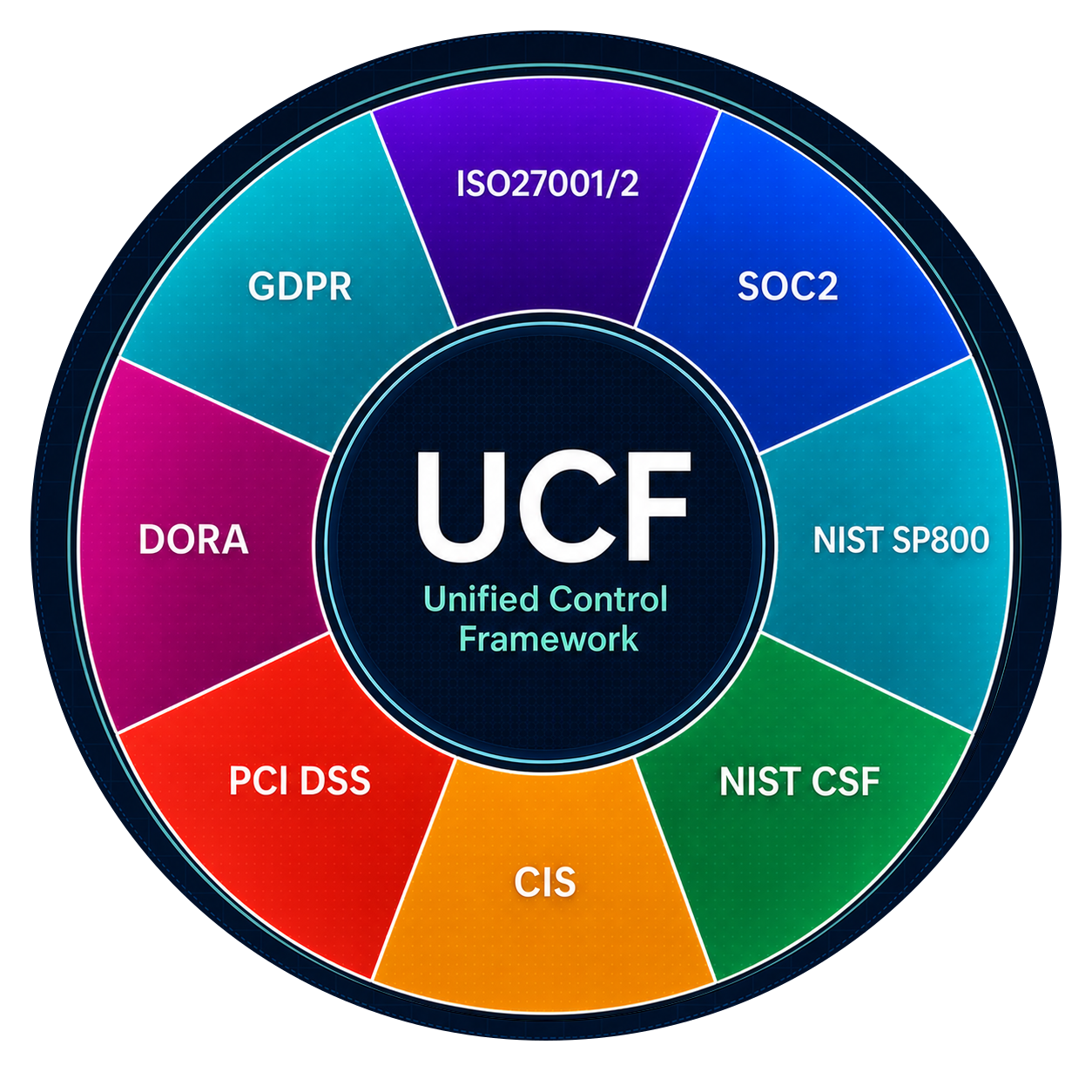
One Compliance Program. Multiple Frameworks.

A unified control structure creates reusable evidence across security, privacy, resilience, and governance obligations.
01

ISO 27001

02

ISO 27002

03

SOC 2

04

NIST CSF

05

NIST SP 800

06

PCI DSS

07

CIS Controls

08

GDPR

09

DORA

10

NIS2

Evidence traceability

Requirement -> Control -> Evidence -> Audit Conclusion

Every conclusion is tied to governance ownership, control operation, and validated evidence.

Requirement to Audit-Ready Output

01

Requirement

The traceability chain begins with the obligation the organization must satisfy, whether it comes from a law, regulation, contract, customer requirement, internal policy, or security framework. COMPLY captures the requirement as the authoritative source of compliance intent so every downstream control, evidence artifact, and audit conclusion can be tied back to a clear obligation.

02

Framework Control

Framework controls translate requirements into recognized compliance expectations such as ISO 27001, SOC 2, NIST, PCI DSS, GDPR, DORA, or CIS Controls. COMPLY maps these controls through the control library so overlapping obligations can be rationalized, compared, and reused instead of being managed as disconnected audit workstreams.

03

Local Control & Criteria

Local controls define how the organization actually satisfies the mapped framework expectations in its own environment. Criteria, applicability, ownership, implementation guidance, and operating expectations establish what must be true for the control to be considered designed, implemented, operating, and ready for review.

04

Evidence Artifact

Evidence artifacts provide the proof that controls are operating in practice. COMPLY links documents, screenshots, tickets, reports, logs, approvals, reviews, and other evidence directly to the relevant criteria and controls, allowing evidence quality, completeness, reuse, and audit relevance to be evaluated before the audit begins.

05

Audit / Report

Audit-ready outputs consolidate the traceability chain into defensible reporting. Risk registers, Statements of Applicability, audit criteria, control mappings, evidence packages, findings, and management reports show what was assessed, what evidence supports the conclusion, and where remediation or governance action is required.

Key outcomes

Defensible outcomes for executives and auditors.

Defensible Audit Conclusions

Every audit conclusion is supported by traceable evidence that links requirements, controls, criteria, artifacts, owners, and review activity. This gives auditors and leadership a clear basis for understanding why a conclusion is reasonable and how it was supported.

Evidence Reuse Across Frameworks

Evidence is mapped to unified controls and criteria so one artifact can support multiple frameworks and standards. This reduces duplicate requests, repeated testing, and unnecessary rework across ISO, SOC 2, NIST, PCI DSS, GDPR, DORA, and related obligations.

Reduced Audit Prep Effort

Audit readiness becomes easier when evidence, ownership, control mappings, and review status are maintained continuously. Teams spend less time rebuilding evidence packages and more time resolving meaningful gaps before external review begins.

Continuous Compliance Governance

Compliance remains active between audits through defined ownership, review cycles, internal audit, management review, corrective actions, and oversight routines. The program becomes an operating rhythm rather than a point-in-time documentation exercise.

Executive Visibility

Leadership gains a clearer view of control status, evidence quality, risk treatment, audit readiness, and areas requiring action. This allows executives to govern compliance with useful operational context instead of disconnected status reports.

Sustained Compliance Through Oversight

Controls, evidence, risks, and governance activities are monitored over time so compliance outcomes remain durable. Oversight helps identify drift, confirm remediation, and keep the compliance program aligned as frameworks, risks, and business conditions change.

Governance visibility

Executive oversight without losing operational detail.

COMPLY connects accountability, reviews, control status, and evidence quality into a governance model leaders can act on.

1

Framework and control library

Frameworks, local controls, categories, mapping rationale, applicability, and guidance.

2

Audit criteria and evidence

Criteria, compliance artifacts, client evidence, and document-to-control relationships.

3

Client engagement governance

Clients, engagements, assessment scope, frameworks, assessment assets, and ownership.

4

Risk treatment oversight

Assets, vulnerabilities, threats, evaluations, treatments, review state, and treatment controls.

5

Management reporting

Risk register, asset register, SoA, audit criteria, mappings, engagement, and artifact reports.